
-20%
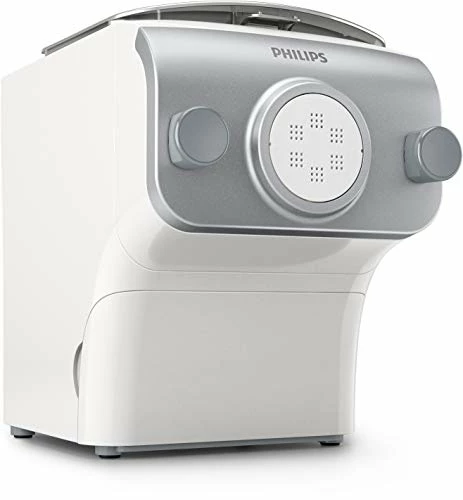

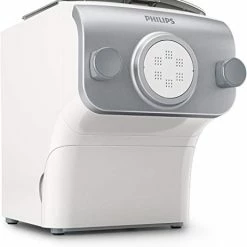


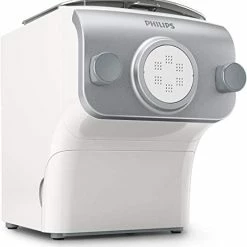
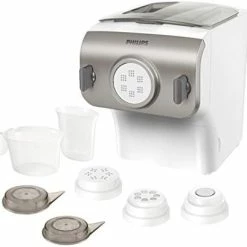
Best Pirce ✔️ Philips Kitchen Appliances Philips Pasta And Noodle Maker Plus, Large, HR2375/06 😍
Original price was: $39.56.$31.65Current price is: $31.65.
- Buy quality, buy with us.
- Get the quality you deserve, for less.
- Your needs, our top priority.
- Multiple payment options for secure shopping with SSL

- Brand: Philips Kitchen Appliances
- Color: White
- Material: Plastic, Steel
- Item Weight: 14.7 Pounds
- Item Dimensions LxWxH: 12 x 15.94 x 13.38 inches
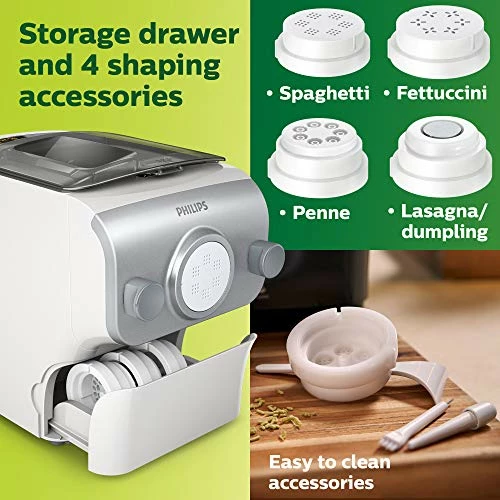
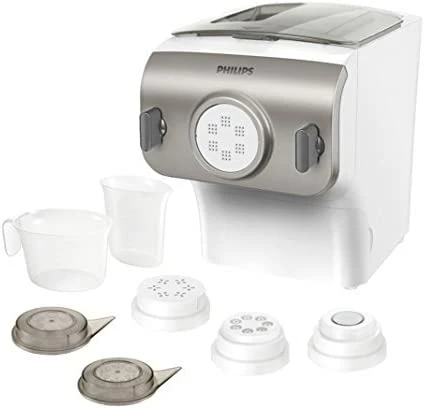
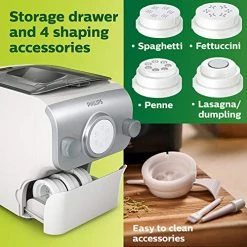
- Included Components: Includes: 4 shaping discs: Spaghetti, Fettuccini, Penne and Lasagna; flat scraping /cleaning tool, flour cup and liquids cup. See more
- Number of settings: 4
- Operation Mode: Automatic
- Is Electric: Yes
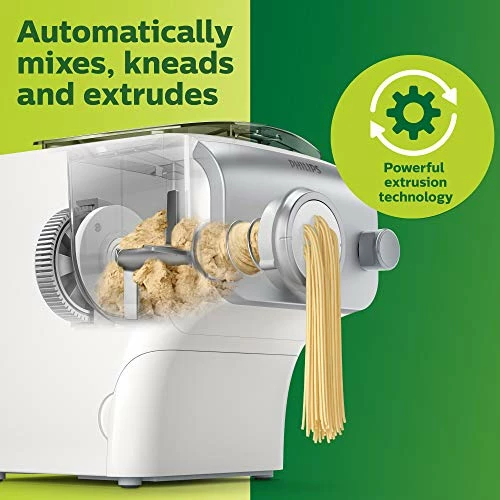
- Fresh flavorful pasta and noodles has never been easier. It automatically mixes, kneads and extrudes your favorites. Add the ingredients and it does the rest – 1/2 pounds pasta in as little as 10 minutes
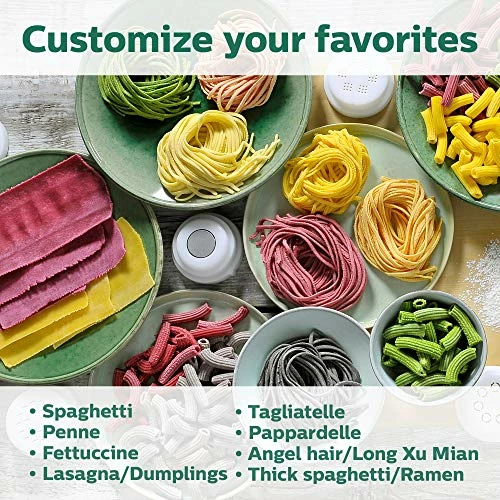
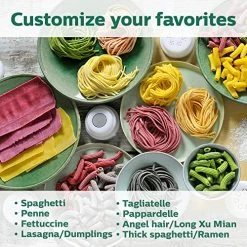
- Experiment with an unlimited number of ingredients like egg, vegetable juices, herbs and flours to create healthy and delicious gourmet, gluten free and colorful pastas for your family and friends.
- Four shaping discs to create various types of pasta and noodles: Spaghetti, fettuccini, penne and lasagna/Dumpling; Pasta/noodle cutter, cleaning tool and measuring cup.
- Taste the difference of fresh homemade pasta. Make healthier pasta and noodles at home, choose what ingredients to add without the worries of any unknown ingredients.
- With dishwasher-safe parts, the pasta maker can be easily setup, dismantled and cleaned. Includes a storage drawer that holds all the shaping discs and cleaning tools
- Get inspired by the recipe book. The included recipe book was created by culinary experts. Includes an ingredient list for various types of flour as well as recipes for 15 pasta and noodle dishes.
| Style | New, Old, W/ Accessories |
|---|
2 reviews for Best Pirce ✔️ Philips Kitchen Appliances Philips Pasta And Noodle Maker Plus, Large, HR2375/06 😍
Add a review
Related products
-25%

Original price was: $109.99.$83.00Current price is: $83.00.
-20%

Original price was: $7.99.$6.39Current price is: $6.39.
-20%

Original price was: $24.49.$19.59Current price is: $19.59.
-20%
Original price was: $29.99.$23.99Current price is: $23.99.
-20%
Original price was: $45.60.$36.48Current price is: $36.48.
-20%

Original price was: $29.99.$23.99Current price is: $23.99.
-20%
Original price was: $14.99.$11.99Current price is: $11.99.
-49%

Original price was: $183.00.$93.00Current price is: $93.00.
Jackie DeCesaris –
As a hand maker of pasta, and having very fierce opinions of it, I waited a long time before even considering this machine. I have a LOT of pasta machines and gadgets, some I have held up to the light and have praised, some that I have thrown back into the netherworlds of my kitchen bins to be forgotten. I have always had a bit of a love hate feeling with extruded pasta. It always has a machine-y feel to it and never has that true warm hand feel that is so great. I have owned and nixed the Kitchen Aid extruder for producing machine-y pasta, but I have loved the Kitchen Aid flat roller and hand cut (but not the terrible work). I owned some older rickety 70s pasta maker/extruders that were loud and downright dangerous.Enter Philips. At frist, the price blew my hair back. All that for PASTA? The price alone just about would ruin the meal, I thought. So I waited. And the price came down some. It arrived and within 15 minutes of unboxing….I kid you not….15 gosh darn minutes……faster than the freaking water could BOIL I had fresh pasta hanging, ready to go. The tips of my fingers really began to tingle when I calculated what this meant: more time for sauce prep, more time for playing with types of pasta. Houston, we have a GO.I immediately placed a purchase for the other disk sets for two reasons, and this is where the star reductions comes in. I find that Philips has a distictly American feeling for pasta that, IMHO is big, bready and chunky, whereas I prefer my pasta, thin, airy and delicate. The spaghetti disk that comes with the machine would make a cafeteria proud, but not my home. The thin spaghetti in the add on set is heavenly….light, sweet and airy. I need to pick in the disks to find thinner, less chunky disks….thinning the dough (read:add a tiny bit more water) also makes for less chunky pasta. So the good is mixed with the adequate in the sets, but the good is there.Operation. A toddler could do it a probably faster than you can. We use a scale since we are old school. So, 500g flour into the bin, shut the top, turn on to large batch setting, add liquid from premeasured cup…woah pasta is already coming out so your water should have been boiling! Yup! Boil the water before you start making pasta since it takes longer for water to come to a boil than it does to make a full batch of pasta. Where is the mess, you wonder? Well, there isn’t one with this machine. Try as you might, you won’t be able to make one no matter how clutzy or distracted you may be. We have tried, and failed, at making a flour mess with the Philips. Oh, and BTW the machine is so quiet a baby could sleep next to it. Seriously.They don’t lie when they say clean up is a breeze. Trust what they say on this. Either immediate washing up liquid on a couple of parts, or better yet, wait till after the meal and the flour dries up and everything falls off for an even easier washing up by hand or DW. Clogged disk? Not likely, but a quick trip to the freezer will take care of that without any strain or sprain on your part. Easy peasy.But getting back to price? Well, a foodie friend once told be that home made pasta was over rated…and I can not disagree more (as could my family). And if you feel that home made pasta is priceless, then maybe this is great for your arsenal. It will not replace hand kneaded, hand pressed pasta, but it blends in with my collection nicely. If you are a beginner, it is a good way to start and build confidence. It also does something important: I would not, say, make ravioli as often due to the work of making the flat sheets, but since the machine it there, I can be coaxed much more easiy into ravioli night knowing my worn out self is not going to do all the legwork. The compromise makes for more happy family meals, faster, without me collapsing.Taste, you ask. TASTE. Well, I won’t lie. My family tells me they can taste hours put into meals. 15 minute pasta isn’t “hours” pasta BUT and I mean BUT they aren’t choking on this pasta….they are gobbling in down and groaning with home made pasta happiness. Like, enough for me to say, yeah, this is a weeknight thing, and I can spend more time on a sauce than on the pasta and everyone is really, really happy and I look fresh as a daisy after cooking THIS. Yes, the pasta is darn good.The machine was obviously slated originally for an Asian audience and I appreciate the Asian turn the recipe booklet takes. I plan to give it a go. I had been working on some of those concepts already and it is neat to see how this machine can more easily replicate Asian noodles (maybe that’s why some of them are so thick). Yeah, GO UDON! So don’t expect lots of Italian inspired stuff in the recipe booklet. I was charmed not to find them there.I’m keeping the machine and it won’t go to dust here at home. I hope more thin disks are made. I think there is much potential here, and as it stands, great fun and super amazing ease of use for everyone.I paid full price for this item, so this is a non biased review. If this review did help you, please click “yes” below.Update: It is 4/2016 and the machine is still a winner. The kids and their friends come over to use it an cook. As ever, it is easy to clean and care for. This remains a great purchaseUpdate: Christmas time 2016 and we are still loving the machine! Don’t hesitate.
Catherine Anderson Author –
Okay, after reading a few bad reviews, I was a little hesitant to purchase this. But now I’m ever so glad I did! We used a scale for the gram weight of both flours and liquid, a beaten egg plus water. (My scale zeroes out when the bowl is on it when turned on. So we measured the weight of the egg first, quickly beat it with a fork, and then added water carefully until we attained the proper liquid weight.) We used semolina and all-purpose flour, measured precisely. There was nothing to it! We had perfect spaghetti, and I didn’t think it was too thick, either. In short, I think this machine is amazing. I will update as I go along to keep you posted.Now for the BAD reviews I’ve read.PLASTIC BITS IN THE PASTA I read about this complaint several times in reviews. When I opened my pasta maker box and got the machine out, I looked it over carefully to see where it might chip off sharp pieces of plastic. I could find nothing to explain why others found slivers of sharp plastic in their noodles. Then I examined the pasta molds/shapers, which were, to my mind, the only possible culprit. Yes, we found a loose bit of plastic on one mold. I would recommend that one should scrub the molds with a brush before using them. They are manufactured, after all, and the loose bits of plastic that may cling to them should be removed prior to making dough and putting it through the extruder. SIMPLE FIX.THE NIGHTMARE TO CLEAN COMPLAINT is more difficult for me to figure out. I left my pasta maker on the counter overnight and didn’t clean it until morning. It was EZ-PZ. In fact, I was amazed by how simple it is to take the machine apart, and the actual washing was a breeze. I soaked my parts in warm, soapy water while I wiped down my counters and stove. The parts came clean, no problem.BROKEN PARTS: I bought this pasta machine despite the reports that Philips doesn’t offer replacement parts. My machine being brand new, I haven’t deal with this issue yet and hope I never do, but my thought is that all of us should write letters to Philips requesting that they change this policy immediately and make replacement parts available. If the company wishes to maintain a solid reputation, not offering replacement parts for a fairly expensive piece of kitchen equipment is a good way to lose their foothold in the marketplace. The squeaky wheel theory, folks! Let’s make a little noise to get this problem rectified!Update: I’m still shy of owning this pasta maker for a whole month, so bear in mind that I’m a newbie. But I am still in LOVE with this machine. So remember that as you read about my disasters. Giggle. I wanted to make lasagna sheets to create homemade ravioli. I expected the lasagna sheets to magically extrude from the machine, just as spaghetti and linguine does. NOT! I couldn’t for the life of me get the ratio of flour and water correct. I started on Thursday. I had three fails that day. I saved the last batch of dough to roll it out myself, rather than just toss it. On Friday, which was yesterday, I arose from bed on fire to conquer that darned pasta machine. Hmm. I turned it into a science project. Would one more tsp of water fix the problem? I had two more fails. Then I went Internet searching for others who’d experienced the same problem. I finally hit pay dirt right here, in an Amazon review. A person in here said to stop all the weighing and craziness in favor of a simple 3 to 1 ratio of flour to water. Translated, I mean 3 cups of flour to one cup of water. Or, for a small batch, 1 1/2 cups of flour to 1/2 cup of water. Hear trumpets blaring! Envision me pumping a victory fist in the air. My machine started spitting out lasagna sheets! That last batch was as perfect as it’s going to get. With all the hand rolling of failed pasta dough and that last amazing batch of lasagna sheets, I made 92 ravioli! For dinner, I ate twelve of them. I gently boiled them in salty water, lifted them with a slotted spoon, and drizzled a little Classico pasta sauce over the top with sprinkles of grated parmesan. My eyes nearly rolled back in my head. The ravioli was perfect. It tasted like something from a high-end restaurant. (I took my dogs for a long walk, hoping to burn off a few of the calories.) For regular pasta, I will probably still follow the booklet instructions, because my noodles were perfect straight from the recipes in the cookbook, but the next time I wish to cut out and press ravioli, I’ll use the 3 to 1 ratio.WANTING MORE PASTA SHAPES? I see a lot of reviewers wishing for different pasta molds. Guess what? I found a wealth of them, including a pasta sheet disc for thin dough (.6 ml) in two widths, 95ml and 125 ml, plus molds for different types of pasta. Gnocchi. Conch shell. Extra large shells, as well. The sky is nearly the limit. These Philips friendly molds are made in Viet Nam and take a while to arrive, but the manufacturer has a sterling reputation in pasta making groups, and he even posts in them. His business depends upon his fair dealing with customers, so I trust him. You can even buy molds for kids. Little Mickey Mouse noodles, hippos, kitties, minions. Just go to Etsy and search for Philips Pasta discs. You’ll find them. Note: If you order a mold set, you can then sometimes order a different insert for that mold housing to make other pasta shapes or other thicknesses, and that reduces your cost for a different extruder shape by 50%. So don’t forget that and order a whole new housing and insert. I didn’t know this with my first order.UPDATE: I am STILL love with this pasta maker. I figured out how my dough should look as I add liquids. Tonight, my son went out to change irrigation and asked me to have noodles made before he got back for his gourmet pasta dish. No big. Within ten minutes, I had them on a cookie sheet, sprinkled with potato starch to keep them from sticking together. Covered them with plastic wrap to keep them from drying out. Had the entire machine cleaned as well, except for the die, which I leave sitting out all night to dry, making for EASY die cleaning. I just poke around with the cleaning tool, the dry dough pops out, and leaves the extruding die almost spotless. A quick brush and scrub. All clean! For homemade fresh pasta, it could not be simpler. It is still AMAZING. I never featured myself as a fresh, homemade pasta queen, but now I am. I would recommend this machine to my best friend–if he/she wished to make fresh, homemade pasta.MY LAST UPDATE: My family has become so spoiled by homemade pasta that I honestly think they might throw rotten tomatoes at me if I tried to serve them the store-bought stuff. Last weekend, we were going on a camping trip. My son, an incredible chef. had made demi-glas for pasta, and though we were all ready to go, I’d forgotten to make the pasta! He said, “How long, Mom, to make two double batches?” We were going to be gone four days. I said, “Fifteen minutes to make two double batches and five to clean up.” I am not a person who can walk away from a mess in my kitchen, and he knows it. So, I and his girlfriend made two double batches of pasta. His favorite is similar to linguini, only much thicker and wider. I can’t remember the actual name of it, only that with a lovely sauce, it is absolutely AMAZING. So I and his girlfriend ran into my kitchen and whipped up four batches, actually two doubles. In twenty minutes, my kitchen was spotless, and we had two gallon freezer bags filled with fresh, homemade, incredible pasta for our camping trip. If lightly sprinkled with flour and tossed, it keeps beautifully in the fridge for cooking later, so we enjoyed fresh, homemade pasta for four days, out in the middle of a woodland. (Please note that I do not leave my kitchen dribbled with flour or an appliance that isn’t spotless.) Who else can do that–unless they own a top-of-the-line Philips pasta machine? Over our camping trip, we dined like people ordering expensive pasta dishes at a five-star restaurant.Full confession: I’d never tasted homemade pasta, not even at a five-star restaurant. I’d only ever eaten packaged. My first experience was pleasurable with homemade, but I kept thinking the pasta wasn’t cooked enough. It was very al dente. I enjoyed it, but I wasn’t completely sold. We were cooking that thick pasta for only four minutes at first, and I felt that it wasn’t quite cooked enough. Still, it was beyond delicious, better than any packaged crap I’ve ever bought at almost four bucks a pop. Now we cook the thick, wide pasta for six minutes. PERFECT. It is still al dente, which literally means “for the tooth.” In Italy, they realize that you want a little bit of chewy to your pasta for true satisfaction. You haven’t experienced “real” pasta until you eat homemade. It’s a little chewy. A lot delicious. Once you try it, you will never go back to pasta in plastic packages. And I think about that now every time I whip up a batch of homemade pasta, because we didn’t really eat much pasta before I got this machine. That stuff sort of slides down my throat and doesn’t really excite my taste buds. PLUS, it costs! Now my pasta costs pennies. All I need is white flour and water, and that doesn’t cost much. Adding an egg to a recipe doesn’t cost much more. Why pay four dollars for a package of noodles when you can make them for almost nothing with this machine? And it is a sturdy machine. I realize mechanical failure can occur or that parts may break, but this thing is built like a little tank. In the morning, I must make four double batches of pasta for a 4th of July campout. I’ll let the machine cool a bit in between batches. I could probably just make it work hard without worrying, but I love this thing. So I am going to protect it. That said, it will probably last me for many years if I treat it right, and when it breaks, I will definitely buy another one. I would recommend–and have been recommending this machine to friends. Oh, another thing. I now use a digital scale to weigh my flour and liquid. No more mistakes. No more fails. I just measure the flour, water, and sometimes an egg into the machine, and I just trust it. My faith in it has been rewarded with perfect pasta every single time now. If you’re on the fence, I think you will never regret buying this machine.