
-20%
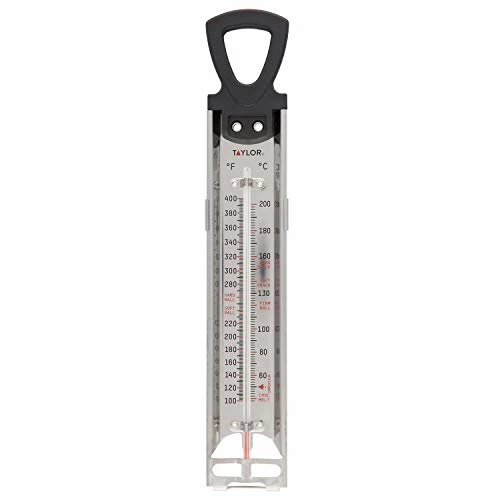


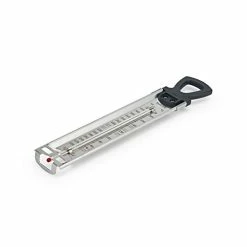
Outlet 🛒 Taylor Precision Products Stainless Steel 🍬 Candy Deep Fry Food Cooking Kitchen Thermometer, 12 Inch 🤩
Original price was: $9.99.$7.99Current price is: $7.99.
- Buy quality, buy with us.
- Get the quality you deserve, for less.
- Your needs, our top priority.
- Multiple payment options for secure shopping with SSL

- Brand: Taylor Precision Products
- Special Feature: High Accuracy
- Color: Multicolor
- Age Range (Description): Adult
- Included Components: Candy/Jelly Deep Fry Thermometer
- Product Care Instructions: Hand Wash Only
- Unit Count: 1.0 Count
- Model Name: RA17724
- Item Length: 1 inches
- Upper Temperature Rating: 400 Degrees Fahrenheit
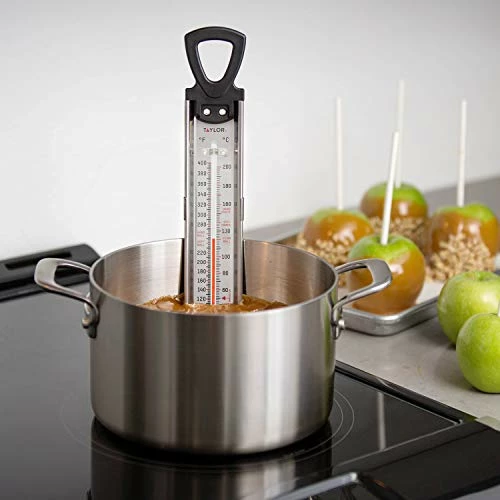
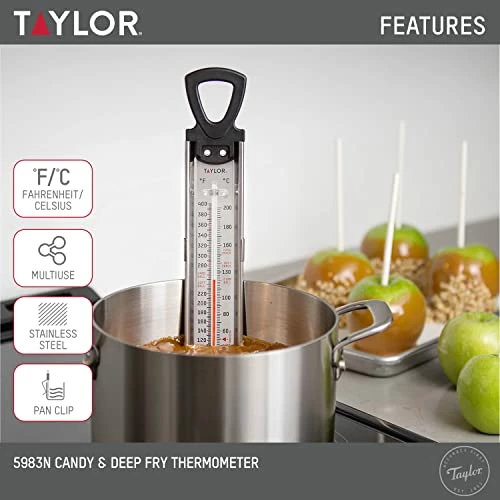
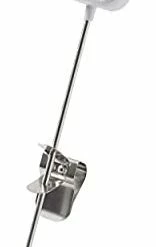
- INSULATED HANDLE AND PAN CLIP Clip is adjustable to attach to any size pan
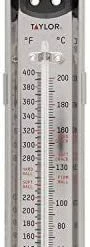
- EASY TO READ Helpful candy temperatures are printed directly on the surface for convenient reference
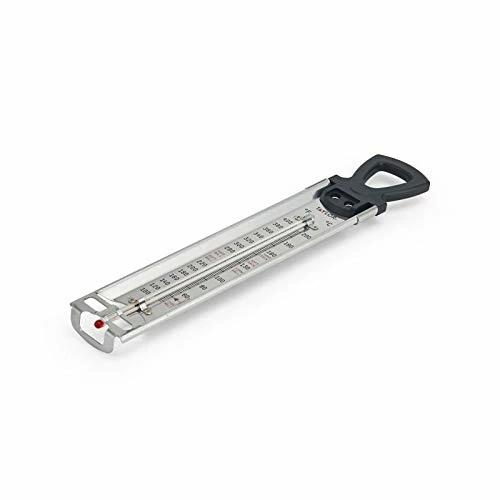
- STAINLESS STEEL The classic design is 12” long overall and can be wiped clean with a damp wash cloth
- HIGHLY ACCURATE Thermometer measures in both °F and °C from 100 to 400°F
- LIFETIME LIMITED This thermometer is backed with a lifetime limited so you can make your purchase with confidence
| Style | Programmable, Traditional |
|---|
8 reviews for Outlet 🛒 Taylor Precision Products Stainless Steel 🍬 Candy Deep Fry Food Cooking Kitchen Thermometer, 12 Inch 🤩
Add a review
Related products
-20%


Original price was: $6.88.$5.50Current price is: $5.50.
-20%

Original price was: $24.99.$19.99Current price is: $19.99.
-20%

Original price was: $11.99.$9.59Current price is: $9.59.
-20%
Original price was: $37.50.$30.00Current price is: $30.00.
-14%

Original price was: $99.95.$86.00Current price is: $86.00.
-20%
Original price was: $18.99.$15.19Current price is: $15.19.
-20%
![Best Sale 😀 ANTONKI Timer, Kitchen Timer, Timer For Kids, Digital Timer For Cooking, Egg Timer, Magnetic Desk Timers For Teacher, Classroom, Toothbrush, Exercise, Bathroom, Oven, Baking, Table, Productivity - 2 Pack 2 Pack Timer W/ Battery - Soft Pink [upgraded Version] 👍](https://www.cuttingboarddeals.com/wp-content/uploads/2022/12/514v5St3JnL-247x247.webp)

Original price was: $7.69.$6.15Current price is: $6.15.
-20%
Original price was: $12.99.$10.39Current price is: $10.39.
Surf.Whammy –
As I have never had a candy thermometer, I was expecting this one to be not much bigger than the photograph, so the actual size (2″ by 12″) was a bit of a surprise, but after studying the unit, it is quite logical and the design makes excellent sense.I selected the Taylor Classic Candy and Deep-Fry Analog Thermometer, because it is analog, which is fancy way of explaining that it uses technology of the 19th century or earlier. No batteries; no computer chips; no wires; no probes, and so forth.In other words, once you use it for a while and by doing so “get to know it”, it will continue to work the same way day after day, week after week, and year after year.Ideally, it is calibrated accurately at the factory, but if you took a course in Physics or Meteorology and stayed awake, then the general concept of “calibrating” becomes a bit nonsensical with respect to this particular thermometer, which also is highly dependent on the altitude of your kitchen, as well as ambient weather conditions at the time, because for the most part stuff like this is “calibrated” either (a) at the factory using factory conditions or (b) at the factory based on being at an altitude of 0 feet (or “sea level”) at standard atmospheric pressure and a certain temperature, which is fine if you either (a) live in the same town as the factory or (b) live on the beach under a coconut tree.However, if you are in a city at a higher altitude like Denver (“The Mile High City”), then you know that water boils at a lower temperature than 212 degrees Fahrenheit and that baking cakes and making Italian Meringue frosting requires vast skill in the finer aspects of organic chemistry, as well typically as an entirely different set of ingredient quantities (for example, less baking powder and one fewer egg or whatever).In other words, everything is relative, and “everything” includes the pots, pans, stove (coal, electric, natural gas, propane, wood), and lots of other stuff, which unless you are one of the people who “just knows” how to cook and bake everything perfectly the first time with no practicing, then the reality for you is that you need to do the recipe over and over until you discover exactly how to make it work perfectly every time, which for roast duck took me two years of roasting at least one duck each week, which was great and made it easier to discover the secret to stellar roast turkey in just one year, which to be specific is to sprinkle approximately one (1) tablespoon of fenugreek on the turkey, along with salt, pepper, onion powder, and about the same amount of powdered sage, even though nobody in their right mind ever would think of using fenugreek as a spice for traditional roast turkey, but I tried it, and it works.Back to the candy thermometer, there is a very nice sliding clip to attach the thermometer to the vertical side of a pot, and the bulb is approximately 1/2″ from the metal base of the thermometer, so you want to select a pot that is the correct size for there to be at least approximately 5/8″ to 3/4″ of liquid, where for example if you are making the candy syrup for Italian Meringue and are using 1 and 1/2 cups of sugar and 1/2 cup of water, then use a small diameter pot, so that the saturated sugar solution will be sufficiently high for the candy thermometer to work correctly, which will be a pot with a diameter of approximately 6 inches or perhaps a bit smaller, and the sugar syrup bubbles, so it works, or if not then make twice as much. Sugar is not so expensive, and the important thing is to get the sugar syrup just right, where ideally if you slowly drip it from a teaspoon back into the pan, at the end it will form tiny balls and there will be spider-web strings of sugar syrup like cotton candy or whatever. Light Italian Meringue is a mess, and the only way to get it right is to use the correct number of egg whites and to have thicker sugar syrup, as well as not to whip it too long after you add the sugar syrup, at least if you are at a low altitude, where you want to add the sugar syrup and then whip it perhaps a minute and then stop while it makes nice peaks and holds them, because if you whip it for 5 to 20 minutes, it will be like Elmer’s Glue, so if you are at a low altitude (200 feet above sea level or lower), then the rules are thicker sugar syrup and avoid over-whipping. You can add Cream of Tartar or a little bit of lemon juice to the egg whites, but that is cheating. It tastes best if you do it the hard way, which is sugar, water, egg whites, and a tiny bit of vanilla extract, where the egg whites of four extra large eggs works nicely with 1 and 1/2 cup of sugar and 1/2 cup of water and 1/2 to 1 teaspoon of pure vanilla extract.You might need to do it 10 to 25 times to get it right, but once you get it right and can repeat it reliably it is well worth the effort, and it is vastly important to use fresh egg whites.Summarizing, the Taylor Classic Candy and Deep-Fry Analog Thermometer is well made and bigger than it looks (2″ wide and 12″ long”). It uses “old school” technology, which is excellent and reliable, and when you use the correct size pots and pans, it is a professional grade cooking thermometer, for sure.
CCW –
First – make sure you’re reading a review for the correct item. This digital thermometer shares a page with its analog (glass bulb) cousin – so I see reviews for both mingled together.IMPORTANT!! — TAKE A PHOTO OF THE BACK SIDE OF THE PACKAGE BEFORE OPENING IT! — the package is destroyed in order to get to the thermometer. And, the only instructions are on the back of the package! Ask me how I know!… So far I have not found any online either.So far the thermometer part is great. I have a significant problem with the clip that holds it to the pan.THERMOMETER — two point calibration check with boiling tap-water, then ice water. Boiling measures 211F (vs 212F). Ice water bath yields 35F (vs 32F). So the device is tuned to higher temperatures, which makes sense for cooking. (I don’t have a method to check higher temps). The light seems to be only as part of the set point alarm – if only I could read the manual…Setting the alert-alarm point is easy.THE CLIP — so the sales material above explains how the thermometer will not damage you pan because the end is blunt. I’d say that is true – you’d have to work hard to gouge your Teflon with the tip of the thermometer. But the clip is a different story. I’ll do my best to explain. Imagine the vertical sides of the pan. Mine are thin aluminum material with Teflon nonstick on the inside. The clip is strong thin stainless steel, and so therefore is hardened. Compared to the hardness of Teflon and aluminum, the clip is like a knife, and the pan is like warm butter — if you scrape one against the other – the knife (clip) is going to win. The mere act of installing the clip onto the pan causes its outside sharp edges to slide along the inside of the pan – and since we are human and imperfect, every time they will member a little wiggle to one’s would-be perfectly straight motion. The edge of the clip is sharp enough that is gouged two streaks of Teflon off the inside surface. And on one side, it also cut oua sliver of the aluminum as well. If it just has a silicone pad it would be fine. But it doesn’t. It’s not the end of the world and I’ll Pulitzer something under it in the future to protect the pan. But dang…it is an expensive pan. Should be no real worries for cast iron or stainless pans, though is suspect it will scratch the stainless ones. Maybe. I will say the clip holds the thermometer securely in position -BUT – it is susceptible to being tilted over some due to stirring! — and that means… (same issue as above!).In the
DKrenek –
Easy to read and use.
Marcie E. –
I used this to make candy fondant for feeding my honeybees for the winter. It clips easily to the side of the pot and was easy to read at a glance.
Toni Brier –
The thermometer was easy to read while it was in use. If you’re going to make a large batch, it the perfect product.
Linda Rich –
As described
Vicki Leigh –
This is a wonderful thermometer for cooking candy, frosting or anything else one needs for precise temperature. The only fault is to clean behind the glass as it’s held onto the metal holder. I’ve purchased a few of these in the past and would buy them again. As with any product with glass it’s easily broken.
David K. Mc. –
1st of all this temp probe was meant to be used in in the range of 200 to 300 degrees f temps for frying and candy making. The calibration procedure has you using an ice slurry to calibrate it. Calibration should be done around average temps that they probe was meant to be used. As a former instrument technician I always would check calibration at the low end, (the ice slurry) and at the high end, (boiling water). The device is off 3 degrees at the high end. Water boils at sea level at 212 degrees f. (our kitchen at a 60 feet above sea level). As seen in the photo it was 3 degrees low. Even after the ice slurry calibration it was still 3 degrees low.